English
 português
 français
 italiano

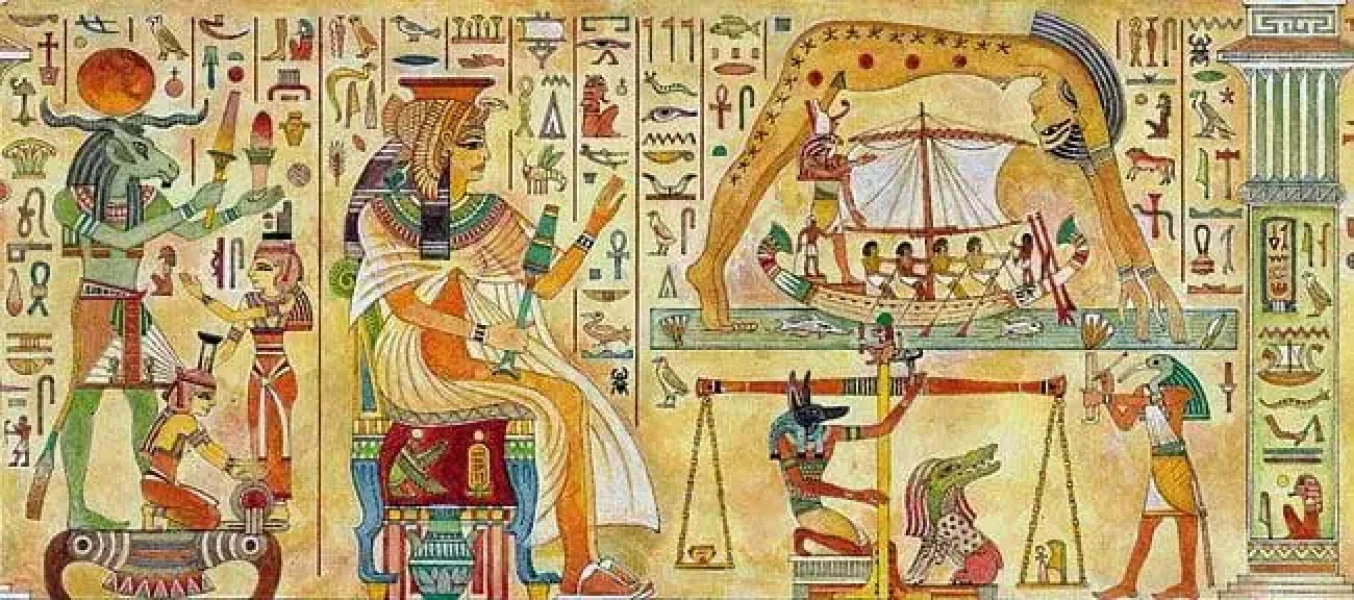
Ancient Egyptian gods and goddesses had a major influence on the beliefs, customs, and daily life of Ancient Egypt. Including Ra the mighty sun god, Osiris the god of the afterlife, Isis, Horus, Anubis, and Hathor all of the ancient Egyptian gods and goddesses had different powers, different symbols, different stories and were given different relationships. Discover the names of the ancient Egyptian gods and learn of their powers and legends.
Discover the Gods and Goddesses of Ancient Egypt
Ancient Egyptian gods and goddesses were an integral part of Egyptian religion, and their culture and daily life. Egyptians paid homage to a huge pantheon of gods and goddesses, who represented all the elements of nature, the universe and even aspects of their kings, protection, fertility and the afterlife – all made up one of the most captivating mythologies in history.
The gods and goddesses of Egypt include Ra, the sun god, Osiris, king of the underworld, Isis, Horus, Anubis and Hathor. By understanding the history and names of these Egyptian gods, you can gain a greater knowledge of Egyptian culture and their religious history.Discover more Facts about Egyptian History to learn about the fascinating heritage and civilization of ancient Egypt.
What Are the Names of the Egyptian Gods and Goddesses?
Ancient Egyptians thought divine spirits played a role in both the natural world and human life. Gods and goddesses could be symbols of natural forces, locations, concepts, or significant parts of society.
At different times and places, there might have been separate religious traditions and the function of a deity might shift. Some gods became widely used throughout Egypt, and other deities remained especially connected to one temple or district.
Ra: The Sun God
Ra was one of the most popular gods in ancient Egyptian religion. He is usually presented with a human upper body and head and a falcon head.
The Egyptians believed that the sun moved across the sky in the daytime and journeyed through the underworld at night. Ra was the sun god symbolising creation, kingship and power.
Osiris: God of the Afterlife
History Osiris was the most popular ancient Egyptian god and was closely associated with the underworld, rebirth and fertility.
The story of Osiris is one of the most familiar Egyptian myths. The traditional story says that Osiris was murdered by his brother, Seth. Their sister Isis searched for Osiris and assisted in restoring his body, and their son Horus then battled Seth.
Osiris later emerged as a deity of the afterlife and judgment of the dead.
Isis: Goddess of Magic and Motherhood
Isis was an Egyptian goddess who was very important. She was goddess of magic, motherhood, protection and healing. She was the wife of Osiris and the mother of Horus.
When Isis searched for and protected Osiris and raised their son, Horus, it was this representation of the protective mother that became part of the Egyptian religion.
Horus: God of Kingship and the Sky
Horus, or Heru, the falcon-headed, Egyptian lion-headed, or Iunid falcon god was closely connected with the sky, kingship, and protection. He was generally depicted as a falcon or a man with a falcon's head.
Horus, who was called "Son of Isis" or "Son of Osiris." The contest between Horus and Seth became a familiar myth and was associated with the throne (kingship).
The Eye of Horus took on a symbolic status and became one of the most widely known symbols of ancient Egypt. It represented protection and healthy well-being.
Anubis: God of Mummification and the Dead
Anubis was the protector of the dead, and was concerned with mummification and burial. He was normally shown with a man's body and a jackal's head.
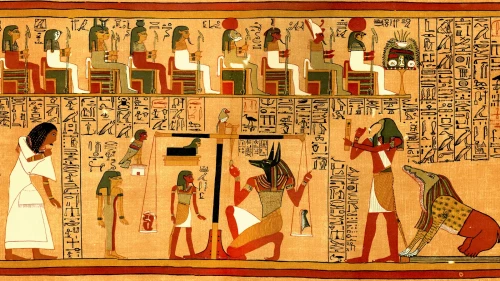
Anubis was an important figure in the Egyptians' ancient cult of the dead. It was also associated with the weighing of the heart in the dead's judgment.
Hathor: Goddess of Love, Music and Joy
Hathor The Great Egyptian Goddess of Music Hathor the Egyptian Goddess of love, fertility and motherhood, joy and music as well as beauty. Hathor the Egyptian Goddess with cow horns wearing a solar disk.
Hathor worshipped widely in Egypt Hathor or Hathour was one of the most popular gods among the ancient Egyptian goddesses.
Seth: God of Chaos and Storms
Set (also known as Seth), who represented the storms, deserts, chaos, and conflict. He is mainly known for the story of Osiris.
The Old Legend Attest: Seth murdered Osiris and then battled against Horus. In the original, older mythology of the Egyptian religion, who was not only an enemy but could also be a very god of might.
Thoth: God of Wisdom and Writing
Thoth was the ancient Egyptian god of wisdom, writing, knowledge and time. He was often depicted with the head of an ibis (or baboon) as is the case here.
Thoth was said to have had a key role in the order of the universe and was linked to scribes and intelligence.
Bastet: Goddess of Protection and the Home
Bastet protected people, was part of family life, homemaking and mothering. Her form was that of a woman or cat, often with her head that of a domestic cat.
There was a deep reverence of cats in Ancient Egypt, and they were especially treasured for their healing abilities and their protection.
Amun: A Powerful Egyptian God
Amun was initially a major Theban god. Over time, he came to be associated with the sun god Ra as Amun-Ra.
Amun-Ra was one of the most important deities in ancient Egyptian religion, especially during times when the city of Thebes was politically and religiously dominant.
The Ennead of Heliopolis
The Ennead of Heliopolis was a family of nine powerful deities associated with the belief system in the Egyptian town of Heliopolis. The nine Gods who made up the Ennead of Heliopolis were Atum, Shu, Tefnut, Geb, Nut, Osiris, Isis, Seth, and Nephthys.
The tales they told explained how the world was formed, and the connections of a number of important Egyptian gods and goddesses.
Egyptian Gods and the Afterlife
Death and the Afterlife The concept of an afterlife was an important part of religious thought in ancient Egypt. A number of gods were associated with death, burial, judgment, and resurrection.
Osiris was linked to the otherworld, and Anubis to mummification and funeral rites. The so-called weighing of the heart was a symbol in which the deceased was judged against the goddess Ma'at according to truth and justice.
The Role of Gods and Goddesses in Ancient Egypt
Ancient Egyptian gods and goddesses were more than just pagan deities. They had close associations with temples and worship, royal institutions and ceremonies, kingship and the afterlife, as well as popular culture and religion.
The Egyptian Gods. Over the course of thousands of years Egyptian religion evolved, and the prominence of individual gods differed over time and place. Their stories can be found in temples, tombs, statues, papyri and in many other forms of ancient Egyptian artifacts.
Ancient Egyptian Gods and Goddesses Today
Ancient Egyptian gods and goddesses tales still draw visitors, scholars, and lovers of antiquity. Temples and monuments in Egypt record pictures and texts of many of these gods and goddesses.
Visit Egyptian temples and archaeological sites to view the gods and goddesses and learn about their significance to the people of ancient Egypt.
-webp.webp)
-webp-webp.webp)
-webp-webp.webp)
-webp-webp.webp)
-webp-webp.webp)
-webp-webp.webp)
-webp-webp.webp)
-webp-webp.webp)
-webp-webp.webp)
-webp-webp.webp)