English
 português
 français
 italiano

Egyptian civilization is one of the oldest and most interesting in the world with many outstanding achievements, structures and institutions created by an advanced and creative society. In ancient Egypt you will find some of the most amazing pyramids and temples in the world, as well as ancient writings using hieroglyphs, and some truly advanced and complex knowledge of astronomy and mathematics. Here are some amazing facts about Egyptian civilization and learn more about what made this ancient civilization one of the most important.Discover more Facts about Egyptian History and learn more about the fascinating heritage of ancient Egypt.
Fascinating Facts About Ancient Egypt
Egyptian civilization is among the oldest and the most influential civilization of all. The ancient Egyptians made remarkable achievements in architecture, writing, medicine, mathematics, astronomy, art, and religion. The monuments, temples, tombs and artifacts of the Egyptians draw travelers from all over the world.
There are numerous intriguing facts about Egypt to learn, from the Great Pyramids and ancient temples, to hieroglyphic writing and some very cool burial practices.
Ancient Egyptian Civilization: Thousands of Years of History
The ancient Egyptian civilization was located along the Nile River and existed for thousands of years. Its long history included different kingdoms, dynasties, rulers, and periods of cultural development.
This was an incredible continuity that enabled the ancient Egyptians to pass from one generation to the next.
The Nile River Was Important for Ancient Egypt
The Nile River was vital to Egyptian civilization. Its waters helped sustain the farmers of the country and was a means of transporting and trading goods.
In the fertile lands around the Nile River the ancient Egyptians could grow crops and settle while the deserts all around offered protection in most places.
The Pyramids Were Built as Royal Tombs
The pyramids are among the most famous achievements of the ancient Egyptian civilization. They were built as monuments and burial sites, primarily for the royals and pharaohs.
The Great Pyramid of Giza. The largest of the three main pyramids of Giza, the Great Pyramid is one of the most famous ancient structures in the world.
Ancient Egyptians Developed Hieroglyphic Writing
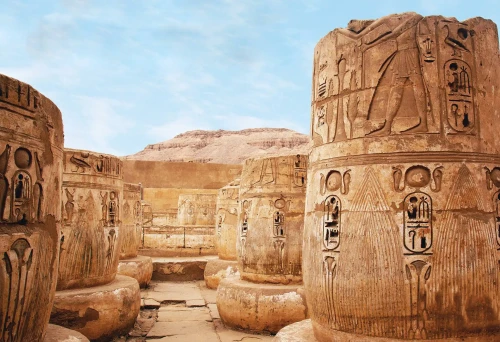
Hieroglyphs were one of the writing systems of the ancient Egyptians. They were made up of symbols for objects, sounds, and ideas.
You can find Hieroglyphic writings on temples, tombs, statues, and monuments, all over Egypt.
Ancient Egyptians Used Papyrus
Papyrus was an important material used in ancient Egypt for writing and record keeping.The reed plant papyrus, which was used to make the sheets, grew around the Nile.
Papyrus Egyptians also used papyrus for other writings including literature, business records, letters, and many other documentation of the time period.
Ancient Egyptians Were Knowledgeable About the Practice of Medicine
Medicine Egyptian knowledge also included a lot of medicine. There were medical treatments described in Egyptian books as well as the way they treated injuries, illnesses and other medical issues.
Archaeological discoveries and surviving papyri provide evidence of their understanding of anatomy, treatments, and practical medical techniques.
Egyptians Used Mathematics in Architecture
Mathematics was important in construction, farming, trading and government. Buildings had to be measured, land to be surveyed and figures drawn up for the size of the crops. Builders used their knowledge of mathematics to construct great monuments.
The incredible accuracy of those ancient structures show how essential mathematics was to Egyptian architects and builders.
The Ancient Egyptians Believed in the Afterlife
Religion was part of everyday life in ancient Egypt. Ancient Egyptian religion was characterized by a belief in the afterlife and by elaborate funeral and burial practices.
The beliefs about what happened after we die, connected to mummification, to the building of tombs, to objects found in the tombs, to religious books.
Mummification Was an Important Burial Tradition
Egyptians used mummification to preserve their dead bodies. The practice was important to their view of the world.
The method evolved over time and was closely linked with the burial of the wealthier and more prominent, like pharaohs and the aristocracy.
Pharaohs Were Central Religious and Political Figures
The egyptian pharaoh were the first to hold the most powerful place within the ancient egyptian society. Pharaohs had the kings of the kingdom. They were also intertwined with religious beliefs.
Many pharaohs built temples, statues, tombs and other monuments that archaeologists can visit today.
Ancient Egyptians Built Huge Temples
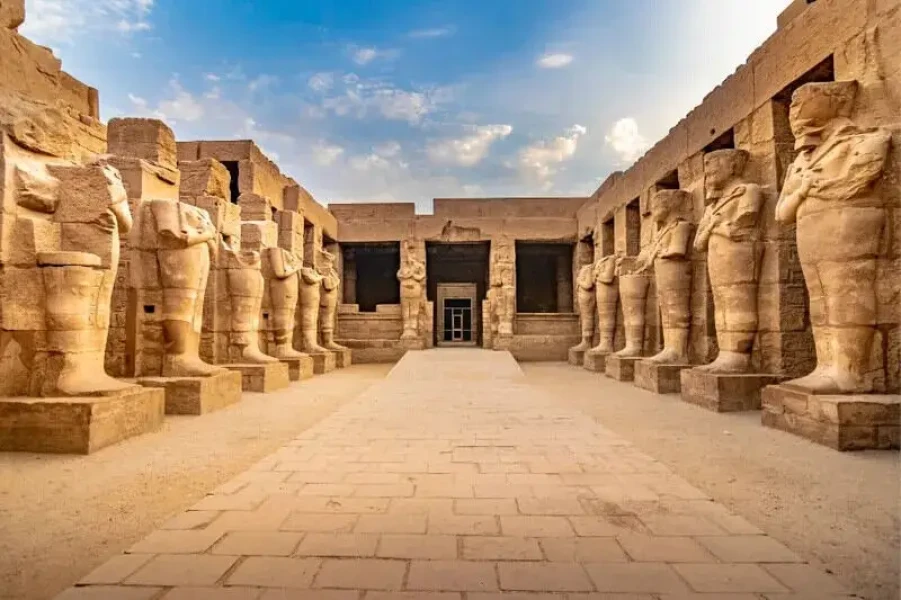
Ancient Egyptian temples were a place for religious worship and were devoted to specific gods and goddesses. Some temples had carved images, columns, and inscriptions and had statues.
Temples at various sites including Karnak, Luxor and Abu Simbel are examples of the skills and religion of the ancient Egyptian.
Ancient Egyptian Art Had Symbolic Meaning
The art of the Ancient Egyptians was far from decoration. Colours, postures, symbols and objects would have carried religious, social and political significance.
Paintings and carvings in temples and tombs document customs, clothing, dress, occupations, and belief systems of the Egyptians.
Cats Were Highly Valued in Ancient Egyptian Society
Ancient Egyptian Cats were revered by the Ancient Egyptians and were connected to some religious practices. Bastet, the Egyptian goddess, was depicted as a lioness or as a cat.
Cats also played a practical role by helping control pests around homes and food storage areas.
Ancient Egyptians Developed an Ancient Calendar
Ancient Egyptians created a calendar primarily related to the farming season and the yearly flood of the Nile River. Time was of great concern to the Egyptians because the seasons helped with farming and religion.
The way they looked at the sky and stars helped them learn about time and the world.
-webp.webp)
-webp-webp.webp)
-webp-webp.webp)
-webp-webp.webp)
-webp-webp.webp)
-webp-webp.webp)
-webp-webp.webp)
-webp-webp.webp)
-webp-webp.webp)
-webp-webp.webp)