English
 português
 français
 italiano

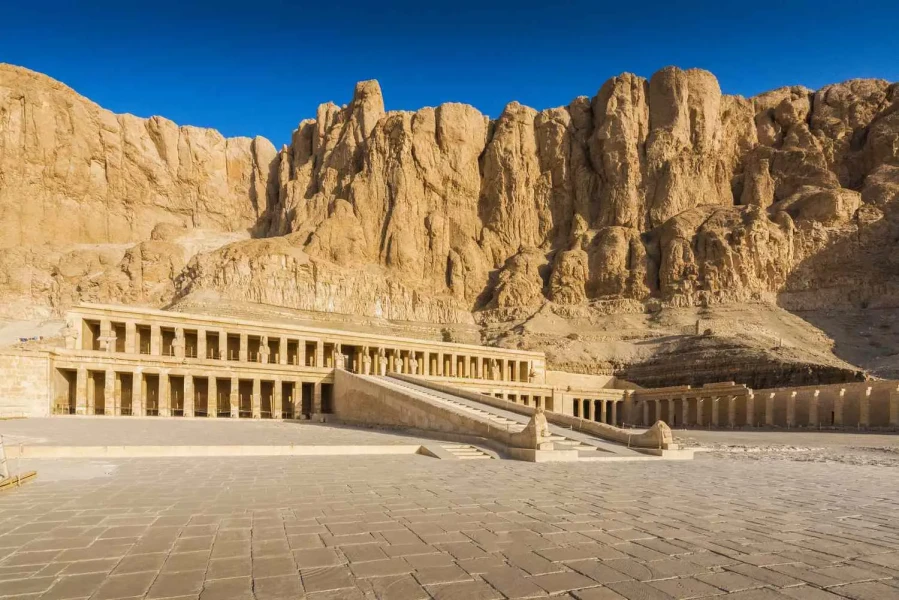
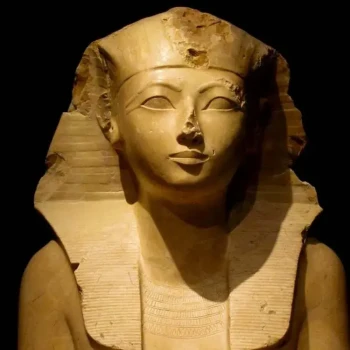
Ancient Egypt is known for its pyramids, strong pharaohs, hidden temples and stories that have lasted for millennia. Among all the rulers Hatshepsut is one of the extraordinary. She was a woman who became pharaoh in a time when Egypt was ruled by men. Than letting her gender stop her Hatshepsut built a strong image as a true and rightful ruler. She led Egypt through a time of wealth building monuments and growing trade with other lands. Her story is a part of Facts about Egyptian History because it proves that ancient Egyptian society was more complicated than many people think.
Hatshepsut: From Queen to Pharaoh
Hatshepsut was born in Egypt’s royal family in the 18th Dynasty, about the 15th century BCE. She was the daughter of Pharaoh Thutmose I and Queen Ahmose. Because of her background she was closely connected to the Egyptian throne from an early age. Hatshepsut later married her brother, Thutmose II following the traditions of the royal family. After Thutmose II died, his young son, Thutmose III became the king. Since Thutmose III was still a child Hatshepsut initially served as regent helping manage the kingdom on his behalf.
Over time however Hatshepsut took a more powerful role and eventually declared herself pharaoh. This was unusual because the position of pharaoh was normally associated with men. Hatshepsut understood the importance of presenting herself as a ruler so official statues and reliefs sometimes showed her wearing traditional royal clothing and symbols associated with male pharaohs. At the time some inscriptions identified her as a woman. Than simply hiding her identity Hatshepsut used the traditional language and imagery of Egyptian kingship to strengthen her authority.
Her rise to power makes Hatshepsut an important figure for travelers in ancient Egypt. Several temples and monuments from her time still let visitors see how Egyptian rulers used buildings to keep their legacy alive. If you are arranging an Egypt trip, you can read this story at archaeological sites. Start with places near Luxor and along the Nile Valley.
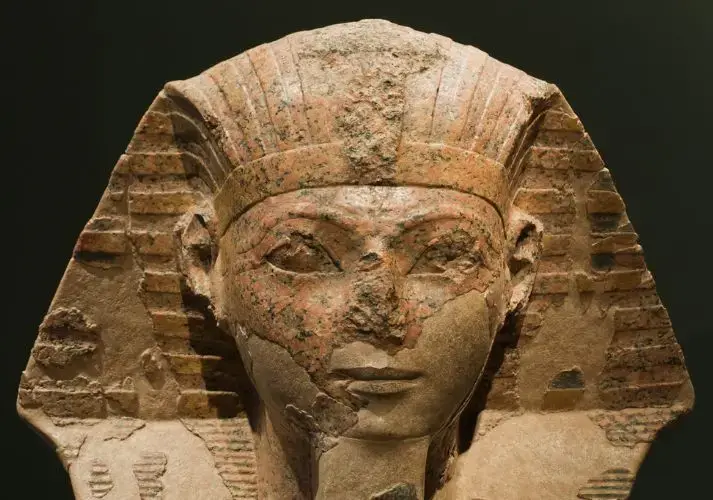
A Pharaoh Known for Building and Trade
Hatshepsut’s reign is often linked to construction, economic growth and international trade. Of concentrating mainly on military expansion, Hatshepsut supported large building projects and encouraged commercial relationships with other regions. I see that Hatshepsut’s reign shows that ancient Egyptian power was not based on warfare. Hatshepsut’s trade, architecture, religion and economic stability were also parts of royal leadership.
One of the famous achievements of Hatshepsut was the expedition to the Land of Punt. The exact location of Punt is still debated, It was probably in the region of the southern Red Sea and northeastern Africa. Hatshepsut’s Egyptian expeditions returned with goods, including incense, exotic plants, animals and other products. Scenes of this journey were carved into the walls of Hatshepsut’s mortuary temple. These reliefs give historians information about ancient Egyptian trade and the goods that were considered important to Hatshepsut’s royal court.
Hatshepsut was also responsible for construction projects throughout Egypt. Hatshepsut restored temples and created new monuments dedicated to the gods and to Hatshepsut’s own royal legacy. Hatshepsut’s building program helped strengthen Hatshepsut’s image as an Egyptian pharaoh. Hatshepsut understood that impressive monuments could communicate power and preserve Hatshepsut’s memory for generations.
Hatshepsut’s famous monument is the Temple of Hatshepsut at Deir el-Bahari, located on the west bank of the Nile near modern Luxor. The temple is built into the cliffs. Features large terraces, columns, statues and detailed reliefs. Its design is one of the distinctive examples of ancient Egyptian architecture. Today it remains a destination, for people exploring Egypt’s archaeological heritage.
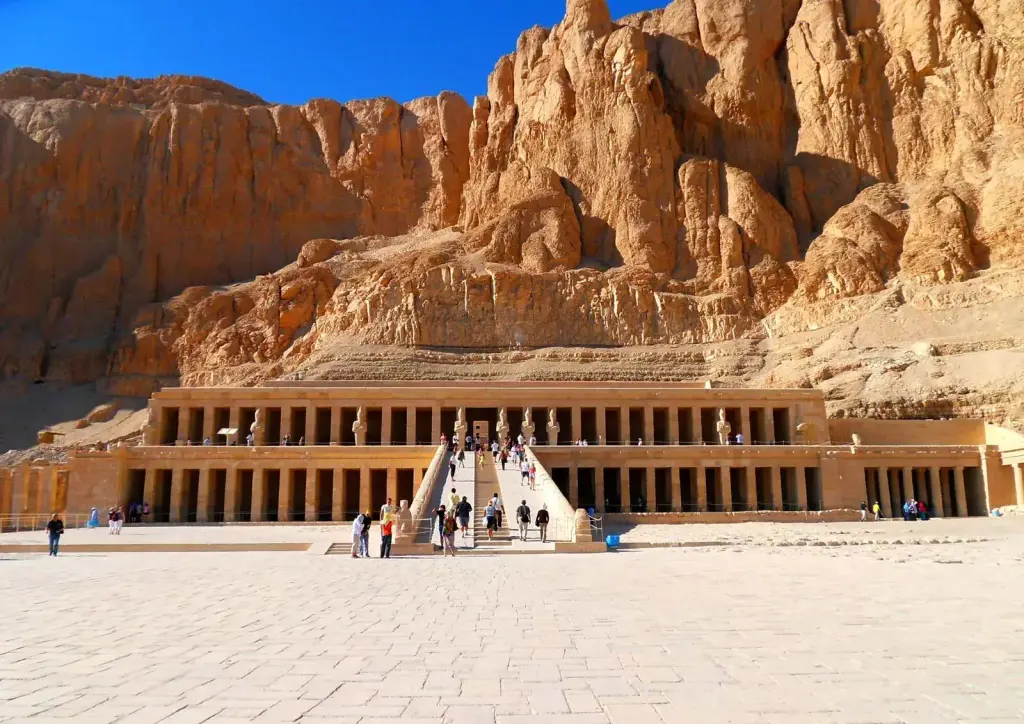
The Temple of Hatshepsut and Her Lasting Legacy
The Temple of Hatshepsut is more than an archaeological site. It is also a record of the pharaoh’s story. The temple was designed as a mortuary temple. It was connected with the worship of the god Amun. It was also connected with Hatshepsut’s legacy. Its terraces and long lines create a connection between the natural cliffs and the architecture. The reliefs inside the show religious scenes. They show ceremonies. They also show the expedition to Punt.
Hatshepsut’s legacy became complicated after her death. Thutmose III eventually became the ruler of Egypt. Some monuments and representations associated with Hatshepsut were. Removed. For years this contributed to uncertainty about her role in Egyptian history. Later discoveries and the study of inscriptions helped historians understand that she had been a pharaoh. She ruled Egypt for years.
Today Hatshepsut is remembered as one of the significant rulers of ancient Egypt. Her story is particularly interesting because it challenges the idea that all Egyptian pharaohs were men. Her reign demonstrates how royal authority could be presented through traditions. It shows how it could be shown through ceremonies. It shows how it could be shown through monuments. It shows how it could be shown through created images.
Her work in architecture can help visitors link the past to today’s trips. In Luxor, travelers see a clear view of ancient Egypt. The Temple of Hatshepsut stands out, along with Karnak Temple and Luxor Temple. Don’t miss the Valley of the Kings either.
When you walk through these sites, you get to see old temples and royal tombs up close. You also come across monuments that reflect what the pharaohs valued and built. Places tied to Hatshepsut help visitors feel how life may have been under her rule. That is one reason Luxor still ranks as a top stop for anyone who wants to study ancient Egyptian history.
Hatshepsut in the Story of Ancient Egypt
Hatshepsut’s story is a part of learning about ancient Egypt. Hatshepsut was not simply a woman who happened to sit on the throne. Hatshepsut presented herself as a pharaoh, led building projects, pushed trade and built monuments that still draw interest after thousands of years. Hatshepsut’s reign gives a view of Egyptian culture and shows how politics, religion, money and buildings were all linked.
Hatshepsut also is part of the amazing historical world that produced many famous Egyptian rulers. Centuries later Ramses II became one of Egypt’s famous pharaohs remembered for a long reign, battles and huge building projects. Although Hatshepsut and Ramses II lived in times both show how Egyptian rulers used monuments and inscriptions to claim their spot in history.
For travelers learning about Hatshepsut can make a trip to Egypt even more meaningful. Egypt tours are not about seeing famous monuments; they also give chances to discover the people and stories behind them. From the temples of Luxor, to the sites of Cairo Egypt offers many links to its ancient past.
-webp.webp)
-webp-webp.webp)
-webp-webp.webp)
-webp-webp.webp)
-webp-webp.webp)
-webp-webp.webp)
-webp-webp.webp)
-webp-webp.webp)
-webp-webp.webp)
-webp-webp.webp)