1
September 2, 2025
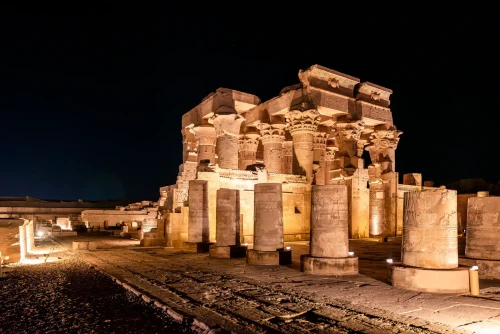
On the eastern bank of the Nile, Kom Ombo Temple is one of those Aswan attractions that just feels really special, and honestly, it’s a strong example of ancient Egyptian architecture. It sits about 45 kilometers north of Aswan City, looking over the Nile, so visitors get this mix of amazing scenery and a deep historical background at the same time.
The temple was built in the Ptolemaic Period, somewhere between 180 and 47 BC, and later, during the Roman era, more decorations were added. Because of that, Kom Ombo Temple doesn’t really compare to other places. Its rare double layout was made to honor two different gods, almost on equal footing, which is why it became one of Egypt’s more distinctive religious monuments.
Nowadays, the temple receives thousands of visitors each year. People come to see the well-preserved reliefs, the impressive columns, and those wide panoramic views across the river. As one of the top Aswan attractions, it’s also a favorite stop for travelers exploring Upper Egypt, and for anyone curious about ancient Egyptian history, it’s basically an essential destination.
The history of Kom Ombo Temple sort of mirrors the cultural mix of the Ptolemaic and Roman periods. Work started during the time of Ptolemy VI Philometor, and then it went on across several Ptolemaic rulers before the Romans finished it and added decorations, so it looks like a joint effort in a way.
Even if archaeologists think there was something earlier on the same spot during the New Kingdom, the temple visitors see today mainly belongs to the Ptolemaic era. Pretty soon it turned into one of the region’s most prominent religious places, where ceremonies were held for both Sobek, the crocodile deity, and Horus the Elder, the falcon-headed guardian, who watched over sacred order.
A standout item people talk about a lot is the well-known medical relief carved into one of the inner walls. The intricate carving is widely understood as a depiction of ancient surgical tools, and it gives historians strong clues about how far advanced medical skills were in ancient Egypt over two thousand years ago.
Walking through the temple, you can also see hieroglyphics that are surprisingly well preserved. They describe religious rites, offerings, royal pageants, and even bits from ordinary daily life. These inscriptions keep helping scholars understand the values and customs of ancient Egyptian civilization, again and again, without really losing their meaning.
What really makes Kom Ombo Temple stand out is its kind of extraordinary symmetrical style; it feels almost intentional in a way. Most Egyptian temples you see were usually made for one deity only, but here it’s different; this place was built for two gods, kind of equally.
The southern side is meant for Sobek, the crocodile-headed divinity linked with fertility, the Nile, and protection, and the northern side is for Horus the Elder (Haroeris), the falcon-headed god tied to kingship and divine order. And to make that clear, nearly every major part was repeated twice: entrances, courtyards, the hypostyle hall areas, the sanctuaries, even the offering rooms. So you can almost feel the balance as you move around.
When visitors walk through Kom Ombo Temple, they can spot beautifully carved columns and detailed relief scenes, plus those elegant architectural touches that show the exceptional craftsmanship of ancient Egyptian builders. The temple also sits on higher ground, overlooking the Nile, which makes the whole view more charming; honestly, it becomes one of the most scenic historical sites in Upper Egypt.
And if you don’t feel like stopping there, just a short walk nearby, you can check out the Crocodile Museum; it holds a fascinating collection of mummified crocodiles and related artifacts. It all helps explain how important Sobek worship was in ancient Egyptian religion, even today.
Going to Kom Ombo Temple is one of the best ways to get into the history and culture of Upper Egypt. The architecture is unique, the religious role is really compelling, and the Nile views are spectacular, so it becomes one of the more rewarding attractions in Aswan for history lovers, photographers, and people traveling for culture.
The place is a well known stop during day trips from Aswan. This means you can link your visit with nearby sites like Edfu Temple and Philae Temple. When you walk through these landmarks together, the whole story feels clearer, and you start to grasp Egypt’s remarkable Ptolemaic heritage.
Plenty of travelers stop at Kom Ombo Temple during a Luxor & Aswan Nile Cruise too. Arriving by cruise gives you a different angle as the temple seems to rise above the water, creating one of the most memorable moments on the river. For many visitors, this stop becomes the highlight, not just another point on the route.
If you’re planning a longer holiday, many Egypt Travel Packages end up pairing Kom Ombo Temple with famous stops like Abu Simbel, Karnak Temple, the Valley of the Kings, and the Temple of Philae. These itineraries are carefully set up so travelers can see a lot of ancient Egypt, with steady transportation and a guide who really knows the story behind each place.
Whether you’re into history, architecture, or cultural exploration, Kom Ombo Temple deserves a slot on your travel plan. It has a remarkable double layout, plus it sits right by the riverside, so the whole scene feels striking. Even now, the temple still holds attention, and visitors keep coming from all over. As one of Aswan’s top attractions, it often becomes a highlight of Aswan day trips and broader Egypt tours, turning each visit into a memorable walk through ancient Egypt.
“
Kom Ombo Temple- Aswan | Egypt Atractions
”
The Kom Ombo temple is one of the most famous temples in Egypt because it is completely symmetrical. It has two entrances, two hypostyle halls - covered by columns - and two sanctuaries. This is because the temple is dedicated to two different gods: Horus–or Haroeris–and Sobek.

From $135
The majestic temples of Abu Simbel, commissioned by Ramses II and Nefertari, are a must-visit locati...

From $40
Take a beautiful boat ride to a stunning town with Aswan Day Tours to see Nubian culture.

From $540
An El Gouna day trip to Cairo will help you unearth Egypt's timeless wonders. On this very memorable...

From $200
A Journey from Aswan Day Tours to Abu Simbel and the High Dam offers an exceptional trip.

From $730
Discover the highlights of Cairo, Aswan, and Luxor in a 7-day tour with domestic flights, entrance f...

From $80
Enjoy a day tour of Kalabsha Temple and the Nubian Museum in Aswan to explore Nubia's rich history.

From $865
For a Cheap budget tour to Cairo, Luxor and Aswan with Happy Egypt, This tour is a great way to expl...

From $460
Escape and witness the wonders of the Nile River with our 4-Day Easter Cruise - an extension include...

From $580
Celebrate Easter with a luxurious Nile cruise from Aswan to Luxor, exploring Egypt's beauty and ench...

From $50
Explore Elephantine Island's ancient history on Aswan Day Tours and visit Khnum's temple.

From $55
Spend a day tour in Aswan with Happy Egypt and explore Suhail Island and Kalabsha Temple.

From $80
Philae Temple on Aswan Day Tours, where stunning architecture and Isis's mysteries await you.

From $610
Enjoy a memorable 3-night Lake Nasser cruise from Abu Simbel to Aswan, including sightseeing, entran...

From $1080
Enjoy with Happy Egypt a fabulous 4-night Lake Nasser cruise from Aswan to Abu Simbel, including sig...

From $2000
Celebrate the holidays on a luxurious Christmas Nile Cruise from Luxor to Aswan. Enjoy an 8-day Daha...

From $2500
Celebrate Christmas and New Year in Egypt with Happy Egypt on this magical 7-day tour. Discover the...

From $4100
Experience 11 days of Egypt over Christmas with Happy Egypt, visiting Cairo, Aswan, Luxor, and Hurgh...

From $3400
Celebrate Christmas in Egypt on a 10-day excursion through Cairo, Luxor, Aswan, and Nile luxury. Ind...

From $2450
A romantic honeymoon package in Egypt. visit the Pyramids and Sphinx with Nile cruise adventure in L...
-webp.webp "4 Day Luxury Egypt Cairo and Abu Simbel Tour")
From $1725
4-day luxury Egypt holidays taking you through activities around the iconic pyramids of Cairo and th...

From $2545
Experience an extraordinary expedition through Egypt's renowned landmarks, including Cairo, Hurghada...

From $2815
Embark on an enchanting 14-day journey through Egypt, exploring the vibrant cities of Cairo, Alexand...

From $1950
A tour to Cairo, Luxor, and Aswan—the city of magic. Besides the Pyramids of Giza, this tour takes g...

From $1400
Take off on a 5-day cruise along the Nile from Luxor to Aswan and discover many amazing highlights o...

From $2435
Start a leisurely and enchanting 8-day Movenpick MS Hamees Nile Cruise, where time seems to slowdown...
From $1125
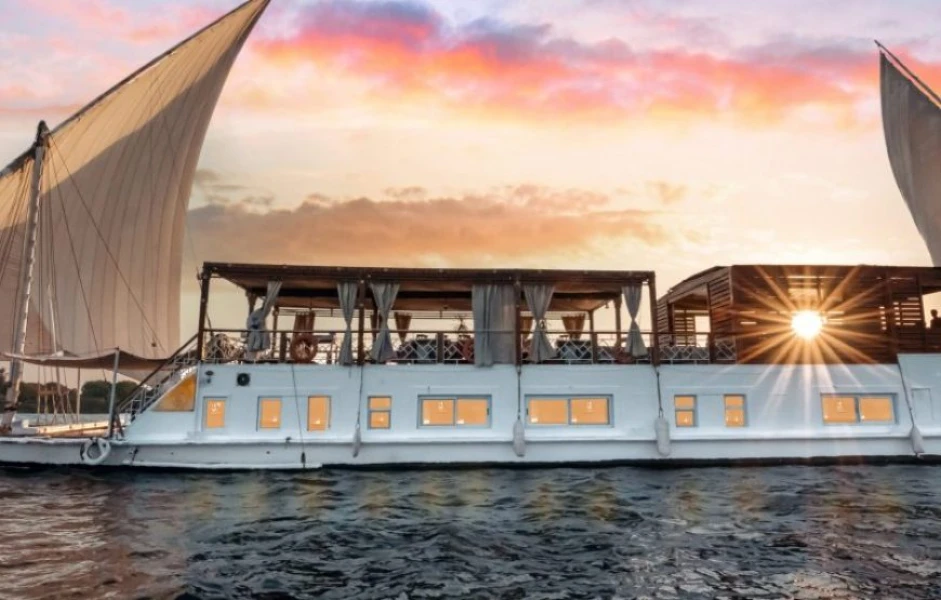
Join on a 5-day journey on a luxury Dahabiya from Aswan towards Luxor. Explore the historic sites of...

From $1080
A five-day Steigenberger Omar El Khayam Lake Nasser cruise between Aswan and Abu Simbel to familiari...

From $800
Discover the wonders of Ancient Egypt on a 3-day Cairo Day Tour joining Aswan and Luxor with Happy...

From $880
Take a Merit Dahabiya cruise that starts at the first cataract of Aswan and ends at the second catar...

From $920
Enjoy a 3-night MS Amoura Dahabiya Nile cruise from Aswan to Luxor as part of our Egypt travel packa...

From $940
Start your exploration of Egypt's historical treasures in a comfortable and private way by booking o...

From $905
You can see the best of Luxor and Aswan with Happy Egypt's 5-day tour, which includes entrance fees,...

From $2530
Travel back into Egypt's rich and glorious past with a classic 10-day tour of Cairo, Alexandria, Lux...
From $2650
A 10-day luxury Cairo, Aswan, Luxor, and Hurghada tour offers all of Egypt's highlights. Float along...

From $940
Spend an unforgettable time on 10 days of classic tours in Egypt. The Sphinx and Pyramids are among...
From $3150
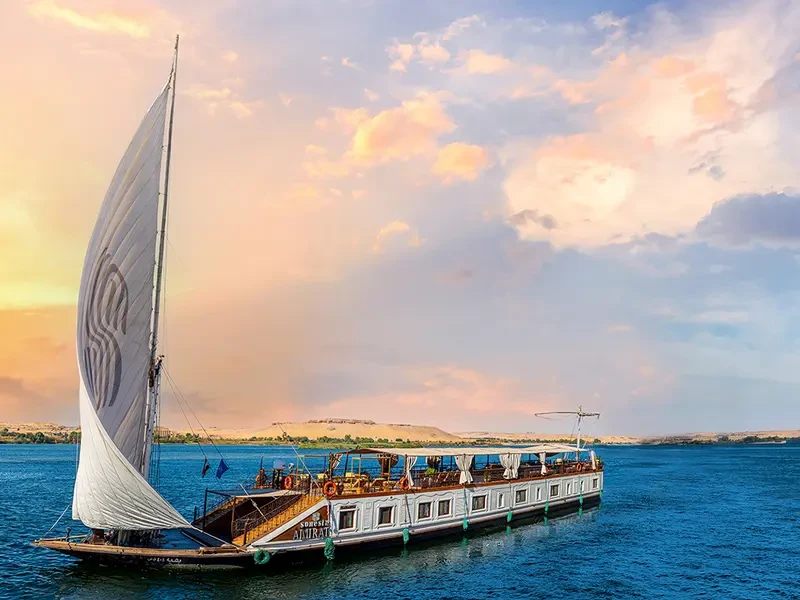
Enjoy a fantastic 7-night Dahabiya Nile cruise from Luxor to Aswan with Happy Egypt as part of your...

From $4850
Discover the Egyptian attractions in 15 15-day tour through Cairo, Luxor, Aswan, Sharm El-Sheikh, an...

From $1070
Enjoy spending 6 days in Egypt with Egypt travel packages, which are designed for travelers with lim...

From $2205
Explore Egypt in 10 days and discover photos of Cairo, sphinx, pyramids, Nile cruise, Abu Simbel, Ph...
From $2190
Enjoy an 8-day luxury tour to Cairo, Alexandria, Aswan, and Luxor with a Nile cruise, highlighting t...

From $1150
Discover Egypt's fascinating history on an 8-day trip through Cairo, Alexandria, Aswan and Luxor and...

From $5350
Join the 10-Day Egypt Total Solar Eclipse in Cairo, Alexandria, Aswan and Luxor, and witness the lon...

From $8400
Enjoy a 15-day solar eclipse tour that stops at Cairo, Alexandria, Luxor, Aswan, and Sharm El-Sheikh...

From $6800
Attend the 11-day tour around Egypt to witness the Solar Eclipse 2027: View the total solar eclipse...

From $4270
A 6-day tour of Egypt will allow you to see the solar eclipse while also exploring Cairo, Luxor, and...

From $4650
Experience a 7-day Egypt solar eclipse tour with Cairo, Aswan, and Luxor. View the eclipse while vis...

From $1560
Experience Egypt like never before with our accessible holidays. Visit the legendary pyramids of Giz...

From $810
Enjoy a memorable 3-night Mövenpick Prince Abbas Lake Nasser cruise from Abu Simbel to Aswan, includ...

From $810
Travel to Lake Nasser in the comfort of the Steigenberger Omar El Khayam and enjoy a luxurious 4-day...

From $680
This 8-Day Egypt budget tour to Cairo with Nile Cruise brings the ancient wonders, spirited culture,...

From $1199
Experience the wonders of ancient Egypt with a 5-day cruise on the Nile from Cairo to Luxor and Aswa...

From $2690
This 11-day classic tour, embracing the best of Egypt, includes Cairo, a luxury cruise from Luxor to...

From $3150
Classic Egypt Tours are the best way to experience Egypt. Discover its most remarkable destinations...

From $1350
You can go on an enchanting 8-day Egypt Easter tour to see the wonders of Cairo, Luxor, Edfu, Kom Om...
From $335
Explore the highlights of Upper Egypt on our 3 Day Luxor and Aswan Luxury Tour. Visit Luxor, Edfu, K...

-webp.webp)
I was visiting Hurghada and was delighted to find out it was possible to see the sights of Luxor while I was there. A friend of mine recommended this tour and I was so happy he did. The driver Gabor and the tour guide Essam took good care of me, showed up on time, and answered all my questions.
In particular, the company sent Gabor because of his English proficiency, which meant he drove from Luxor to Hurghada, picked me up, drove me to Luxor, drove me around all day, drove me back to Hurghada, and then drove back to Luxor! Four four-hour trips in one day! The ride included drinks and bathroom stops and Gabor provided me with Egyptian money to go to the bathroom, because I hadn't had a chance to get any yet.
Essam did a great job recommending what I should do and answering my many questions, and he was always willing for me to stop to take photos, including finding a way for an unscheduled stop for Nile photos.
Lunch was also very good and went beyond the usual felafel-and-shawarma.
It is absolutely worth doing this as a private tour rather than being herded around in a group.
-webp-webp.webp)
We took a ride in the village of Slavia, but I couldn't find an option to review this activity
Because it is temporary so I found this company on the Internet, customer service staff is good, but the only US is not enough is that he can only brush cards online can not pay cash, hope to have the option of paying cash
We had a great afternoon
Leading our guide Ahmed people are good, we because of the previous trip delayed time, let him wait for us a while on the boat, up to the boat to discover the entire boat only us, he also gave us water and drinks, we saw the sunset on the boat to take pictures very carefully, the road Ahmed like we told the surrounding view, some understand some not understand, but this is the charm of travel
Finally arrived at the place where Ahmed was very good to support us in the upper edge, the youth who carried the rope was also reassured to give us, but there was no stubborn edge in the back of the supervision, on the road we would run for a while and walk very self-sufficient, in his body we were afraid and excited, and finally walked into the village of slavery, we went to eat slavery bread with black sugar and adult food, that servant and our soy milk taste super like soy milk, also drank black tea, because Arab coffee is interested so we also tried, the taste is very special. Finally we went to the school in Slavia for a class, really a classroom, we quickly learned some Arabic and Slavic, really too hard, but very happy, if not to rush back and gather, really want to slow down the whole village
-webp-webp.webp)
I participated in Slavia village riding, temporarily found this company, customer service staff is good, the United States is not able to pay with cash, online payment has additional charges to generate scum
The tour guide Ahmed service is good, he took us on a boat to the village, and riding the hill, and slowly walked in the village road, let us both scared and excited, to the village Ahmed brought us to enjoy the local special bread with black honey and old-fashioned, eat as well as soy milk 😁, and also drank black tea, also let us try Arabic spice coffee, the whole shop is very beautiful, then we went to Slavic school to learn Arabic and Slavic language, really very difficult but fresh, but unfortunately to rush back to the collection otherwise really like a lot more, I highly recommend Slavic Arabic riding
-webp-webp.webp)
I participated in Slavia village riding, temporarily found this company, customer service staff is good, the United States is not able to pay with cash, online payment has additional charges to generate scum
The tour guide Ahmed service is good, he took us on a boat to the village, and riding the hill, and slowly walked in the village road, let us both scared and excited, to the village Ahmed brought us to enjoy the local special bread with black honey and old-fashioned, eat as well as soy milk 😁, and also drank black tea, also let us try Arabic spice coffee, the whole shop is very beautiful, then we went to Slavic school to learn Arabic and Slavic language, really very difficult but fresh, but unfortunately to rush back to the collection otherwise really like a lot more, I highly recommend Slavic Arabic riding
-webp-webp.webp)
We wanted to book an Aswan tour on the day our Nile cruise allowed free for a trip. Most of the other companies seemed to only offer trips that had already been included in our cruise package. So I found this company and booked the "Nobles Tombs, Famine Stela and Elephantine Island" tour online, and prepaid by credit card.
We were picked up from our cruise boat from the Aswan dock and taken to a motorboat. Our guide Mustafa took us first to The Nobles Tombs, they were very different to VoK type tombs. They showed scenes of more ordinary life and were tombs of high officials rather than pharaohs. We then sailed to Sehel Island to see the rock inscriptions and the famous Famine Stela. From there we sailed back to Elephantine Island, we had a great view of the Old Cataract Hotel from the river, to tour the Temple of Satet and the Temple of Khnum. We also saw two of the rivers Nilometers.
Overall it was a fabulous tour to the varied sites via a motorboat river trip. Our guide Mustafa was very knowledgeable and spoke very good English. It was easy to arrange and Ahmed contacted us via WhatsApp to reconfirm details when our boat arrived in Aswan.
Highly recommended, great value for money.
-webp-webp.webp)
We organized our 5-days private program for Dendarah, Luxor and Giza-Cairo with Happy Egypt Travel Services.
The program included road transfer from Hurghada to Luxor and visit to Denderah, Karnak and Luxor temples, Valley of Kings and Valley of Queens, then Giza complex, GEM and the Old Cairo.
Communication and planning with Mr. Ahmed el Sayed went extremely well. He was very quick in answering, flexible to the changes we needed to make to our trip and gave us excellent advice for optimizing our rather limited time in Egypt.
We got 2 excellent transport services (one to and in Luxor and another one in Cairo-Giza) with very good air-conditioned vans, each manned by excellent tour leaders and outstanding drivers.
Our tours to the historic and cultural objectives selected for our visit were assisted by highly professional egyptology historians.
Due to this, we returned from Egypt with an absolutely amazing, memorable vacation, rich in content and -not least- strong desire to return one day and explore more this cradle of the civilization which Egypt is.
Thank you, Happy Egypt for becoming part of these memories!
-webp-webp.webp)
We organized our 5-days private program for Dendarah, Luxor and Giza-Cairo with Happy Egypt Travel Services.
The program included road transfer from Hurghada to Luxor and visit to Denderah, Karnak and Luxor temples, Valley of Kings and Valley of Queens, then Giza complex, GEM and the Old Cairo.
Communication and planning with Mr. Ahmed el Sayed went extremely well. He was very quick in answering, flexible to the changes we needed to make to our trip and gave us excellent advice for optimizing our rather limited time in Egypt.
We got 2 excellent transport services (one to and in Luxor and another one in Cairo-Giza) with very good air-conditioned vans, each manned by excellent tour leaders and outstanding drivers.
Our tours to the historic and cultural objectives selected for our visit were assisted by highly professional egyptology historians.
Due to this, we returned from Egypt with an absolutely amazing, memorable vacation, rich in content and -not least- strong desire to return one day and explore more this cradle of the civilization which Egypt is.
-webp-webp.webp)
I was visiting Hurghada and was delighted to find out it was possible to see the sights of Luxor while I was there. A friend of mine recommended this tour and I was so happy he did. The driver Gabor and the tour guide Essam took good care of me, showed up on time, and answered all my questions.
In particular, the company sent Gabor because of his English proficiency, which meant he drove from Luxor to Hurghada, picked me up, drove me to Luxor, drove me around all day, drove me back to Hurghada, and then drove back to Luxor! Four four-hour trips in one day! The ride included drinks and bathroom stops and Gabor provided me with Egyptian money to go to the bathroom, because I hadn't had a chance to get any yet.
Essam did a great job recommending what I should do and answering my many questions, and he was always willing for me to stop to take photos, including finding a way for an unscheduled stop for Nile photos.
Lunch was also very good and went beyond the usual felafel-and-shawarma.
It is absolutely worth doing this as a private tour rather than being herded around in a group.
-webp-webp.webp)
The ride was very nice. We also got a drink after the ride and they we’re so friendly. Really liked this. Abdullah was a good guide.
-webp-webp.webp)
We wanted to book an Aswan tour on the day our Nile cruise allowed free for a trip. Most of the other companies seemed to only offer trips that had already been included in our cruise package. So I found this company and booked the "Nobles Tombs, Famine Stela and Elephantine Island" tour online, and prepaid by credit card.
We were picked up from our cruise boat from the Aswan dock and taken to a motorboat. Our guide Mustafa took us first to The Nobles Tombs, they were very different to VoK type tombs. They showed scenes of more ordinary life and were tombs of high officials rather than pharaohs. We then sailed to Sehel Island to see the rock inscriptions and the famous Famine Stela. From there we sailed back to Elephantine Island, we had a great view of the Old Cataract Hotel from the river, to tour the Temple of Satet and the Temple of Khnum. We also saw two of the rivers Nilometers.
Overall it was a fabulous tour to the varied sites via a motorboat river trip. Our guide Mustafa was very knowledgeable and spoke very good English. It was easy to arrange and Ahmed contacted us via WhatsApp to reconfirm details when our boat arrived in Aswan.
Highly recommended, great value for money.
-webp-webp.webp)
-webp.webp)
Fairytale trip
Holiday with the family. Our tour was organized by Ahmed of Happy Egypt, definitely nice with so much helpful kindness from them! To be redone and we highly recommend them!
-webp-webp.webp)
Fantastic trip
Beautiful giorno.Ottima guide, nice and disponibile.Parla also italiano.La Highly Recommendation for a tour in fantastic Egypt
-webp-webp.webp)
-webp.webp)
We had a private 3-day tour around Luxor, Aswan and Abu Simbel.
The organization was perfect and so was the guide, Mahmoud, who made sure we were enjoying it and provided many tips on places to visit and eat.
Highly recommended!
-webp.webp)
Happy Egypt organised for our family (parents and children aged 16-21) a made-to-measure tour of Egypt.
We started after a day break on the red sea and were leaving from Cairo. Happy Egypt organised everything for us: schedule, transfers, hotels, visits, entries, … as well as a super friendly very knowledge and professional guide whose role in making our holiday amazing was undeniable.
The tour took into account our desire to have family time, but also see the sites when they would be quieter, to have explanations during the visits yet free time to also look at our own pace, and overall, all were met.
Boat was very small (as per our wishes) with a crew that could not have done more for us. Water always available in taxi, boat, etc. No hassle from anyone, just pure pleasure.
If we were to return, there is nothing we would change and we will recommend this company to any of our friends who plan such a holiday: big thank you from all of us.
Thank you Ahmed, thank you Mostafa.
-webp.webp)
Amazing Time!
Hend was absolutely fantastic and made my father and I feel so welcomed on our last day in Egypt! She was very knowledgeable and I highly recommend her if you need a tour guide!
-webp-webp.webp)
-webp.webp)
An unforgettable cruise along the Nile discovering ancient Egypt and much more
We had the pleasure of going on the Dababiya tour for 4 days. Meticulously organised, the tour took us to all the key ancient sites from Aswan to Luxor and every historical spot we visited was more breathtaking than the last. The boat we stayed on was beautiful and clean, and the friendly crew ensured we were comfortable and at ease from the minute we arrived. The onboard chefs provided us with the best meals along the journey, and were so fun to be around.
Our tour guide Essam was kinder and more knowledgeable than we could have hoped for. His Egyptology expertise was vast and his passion for the subject was engaging, allowing us to learn so much from the wonderful history all around us. He was so personable and friendly, and getting to spend time with him, learning about the history and also the local Egyptian culture and customs was incredible. Everywhere we went with Essam we felt truly comfortable and taken care of.
A standout on our trip was the village tour. Welcomed by our local guide Esma, we stopped at a quiet and beautiful village where we were shown the seasonal crops and learned about the local history. Esma graciously welcomed us into her home where we met her wonderful family, enjoyed delicious homemade beverages and got to interact with their animals. Later, a delicious barbecue was preprared for us by the crew on a little patio at the edge of the village, and we got to enjoy some live music and dance with the locals. An incredible day overall.
It was amazing to see that not only does the tour company provide a great service to tourists but also prides itself on fostering networks with local communities, from the quality of drivers and boat captains to the sourcing of ingredients for the food they serve. A truly one-of-a-kind experience for anyone looking to explore the wonders Egypt has to offer. Could not recommend this trip enough!
Dyanna & Antonio
-webp-webp.webp)
-webp.webp)
-webp.webp)
-webp.webp)
The tour was very organised and they meet what was planned. Communication was also very clear, from the planning to during the tour. We would like to highlight that we enjoy the tour guide they assigned to us in Cairo, and the driver in Luxor.
-webp.webp)
This was such a fun experience for my whole family. We were picked up early morning at 4:30 by the balloon company arranged by Ahmed our agency owner. What followed after that was a series of pickups and boat transfers on the Nile to go to the West Bank. The excitement was palpitating and we were in awe to see a collection of all hot air balloons getting ready to take off. It was an unforgettable experience to see the whole city and right at sunrise, the view was breathtaking. Am so glad we did this.
-webp.webp)
Best experience Ever
We went on the four day Nile-cruise on dahabiya boat. It was truly a magical experience. We saw almost every temple and sight along the way, with our great tourguide who knew the answer to everything you asked and had great patience with bad english of some of us. Plus, he is also very good at chess. The boat staff was very nice and professional, always ready to help (they saved me from angry donkey as well). The food was amazing. Im sure our cook must have won Masterchef Egypt. Whole boat was very clean and comfy with plenty space. This tour sure was an experience of a lifetime.
-webp-webp.webp)
Best Experience!!! Go on this Dahabiyat cruise!!
OMG, I couldn't have asked for a better nile trip, 5/5, 100% would recommend. Mahmoud was so knowledgeable, not just about ancient egypt, but Egypt as a whole - religion, culture, norms anything you asked; he had an answer for. He was so friendly, patient, personable warmhearted, passionate and took care of us from the first moments to the last one, as a whole group, but individually as well, checking on us all the time. He is my favourite tour guide by far!! I was on the traditional boat, the Dahabiyat and because it was a small group, Mahmoud made it personable, stopping at places to swim in the nile, to visit sites not on the itinerary, to have dinner in a village with live music and dancing with locals and honestly, it was the first time i actually just relaxed, knowing that everything was taken care of. If you are planning a trip to Egypt, the Nile cruise, on an Dahabiyat is a must, and if you get Mahmoud then consider yourself LUCKY. loved this trip- a definite highlight for me on my travels. And the cruise crew was so welcoming and so fun to be cared under. Its WORTH IT, trust me!!! You won't regret it and the memories will last you a lifetime
-webp-webp.webp)
Better than expected transfer to Luxor
We had a private transfer from Aswan to Luxor with Gaber, our driver.
He was on time at the hotel and was very kind and professional.
His car was very clean, he brought us drinks and treats for the journey and made everything possible for us to be comfortable during the trip.
He was very careful driving and also delivered us within schedule. Very good!!
-webp-webp.webp)
Happy Egypt organised for our family (parents and children aged 16-21) a made-to-measure tour of Egypt.
We started after a day break on the red sea and were leaving from Cairo. Happy Egypt organised everything for us: schedule, transfers, hotels, visits, entries, … as well as a super friendly very knowledge and professional guide whose role in making our holiday amazing was undeniable.
The tour took into account our desire to have family time, but also see the sites when they would be quieter, to have explanations during the visits yet free time to also look at our own pace, and overall, all were met.
Boat was very small (as per our wishes) with a crew that could not have done more for us. Water always available in taxi, boat, etc. No hassle from anyone, just pure pleasure.
If we were to return, there is nothing we would change and we will recommend this company to any of our friends who plan such a holiday: big thank you from all of us.
Thank you Ahmed, thank you Mostafa.
-webp-webp.webp)
Very reliable tour agency
Mar 2024 • Friends
The tour was very organised and they meet what was planned. Communication was also very clear, from the planning to during the tour. We would like to highlight that we enjoy the tour guide they assigned to us in Cairo, and the driver in Luxor.
-webp-webp.webp)
The best itinerary at Luxor
Jan 2024 • Family
The trip booking went very smoothly, and the schedule accommodated our requests to the fullest. We were picked up at our hotel on time, and the driver was extremely courteous throughout the entire trip. The hot air balloon rides are designed with ample seating so everyone can fully enjoy the scenery. Not only do we enjoy the hot air balloon ride, but watching the balloon take off is an impressive experience. For our day trip from Luxor to Dendera, they asked us our preferred departure time and created an itinerary just for us. The driver was also extremely courteous on this trip. I used this company last year, and they always provide spacious, clean vehicles. Even for private trips, the cost is very reasonable. I will continue to use this company in the future.
-webp-webp.webp)
The best of worry-free 10 days in Egypt as a solo female traveller
I know this came in a bit later than expected. I have so much to share but I think I will narrow down to the more important ones. Answering to which activity, should be more than 1 answer option because I’m gonna share it all! 😂
I was referred by a friend to Eid Moawed. One of the guides who helped me plan by bespoke private itinerary for 10 days in Egypt. And no I did not regret it! During my journey with Eid, I was told by other guides that I am lucky to have him as my guide and wallahi it’s true.
Throughout my trip in Egypt, I met different guides, airport assistance and drivers at different cities and they are all lovely! As a solo female traveller, I was well taken care of!
Here are shoutouts of people (support assistance, drivers and guides) who were involved and they were all amazing!
In Cairo,
Airport assistance: Walid made the first impression of my trip looked beautiful already.
Driver: Sayed Fathi drove a comfortable vehicle for just me who also drove me on my last day in Cairo.
Guide: Mohamed who is a very focused guide. Unfortunately it was a long flight for me I had requested to end the tour early. And no, there was nothing wrong with him.
In Giza & Alexandria
Driver: Very shy driver, Ahmed Shaaban again another comfortable ride just for 1 person
Guide: another Mohamed (aka Medo) brought me for my tour. Mohamed reminds me a lot of “Danny Devito” he is really hilarious! I couldn’t keep up with his energy! Thanks for accompanying me for lunch at Sobhy Kaber in Cairo and Branzino in Alexandria.
In Aswan,
Airport Assistance: I was also welcomed by another gentleman who I forgot his name at this time because I was slightly occupied with work. But he did helped me a lot with my luggage when I was engaged.
Driver: Ami Yousef (driver) he really reminds me of one of my uncle. He’s just sweet. He also drove me to Abu Simbel and I also requested to stop by at pharmacy to get some stuffs. He was really accommodating.
Guide: Ahmed, who has a cool, chill 😎 personality. After our trip to Philae temple Ahmed assisted me with my check in for my river cruise Le Fayan, thanks to Eid and Ahmed Refaey (owner of Happy tour) for arranging for me! The cruise was BEAUTIFUL! By the end of my tour, I requested for Ahmed to accompany me for a dinner outside, and he was such a gentleman who didn’t reject. He also brought me to a local market which was amazing!
Back in Aswan again and throughout my sailing journey to Luxor, this was when I finally met Eid! This one is a keeper. Eid was warm and friendly and he made me feel like home. He is very detailed with his sharing of the temples. He even brought books that depicts the differences of how it used to be and how is it today.
Hands down, he will ensure I will arrive early and before the crowd so that I can enjoy the tour. Not only that, as a guide, he takes amazing photos! I had one too many I had difficulties choosing which to post. By the end of the trip he made me felt like family! & yes he did accompany me for dinner too!! He introduced me to local cuisines. It was definitely a good cultural experience!
Driver: Gaber, I met him on my last day in Luxor and he drove me to Hurghada. He made the 4-hr ride felt really short! Not once I got bored in the car. Not only that, his car was equipped with treats and drinks! Such hospitality! Both also helped me picked up my luggage from the river cruise while I was enjoying the hot air balloon ride.
In Hurghada,
I was mainly on my own most of the time. However I did went to Orange Bay that was arranged by the team and met a photographer, Adel Al Dodge, who clicks beautiful photos.
Overall, Egypt was amazing thanks to the team that made it happen for me. Thanks to Eid Moawed and Ahmed Refaey for putting the itinerary for me and surprised me with the private ride to Hurghada. They were quick with response and were really accommodating. They are also able to work around your budget and recommend the best for you. And do consider yourself lucky if you get a combination of Eid and Gaber during your trip!
-webp-webp.webp)
-webp.webp)
Three days in dahabiya on the Nile
Jan 2024 • Family
We made the trip aboard the Dahabiya for 3 days, visiting Aswan, the main temples on the way to Luxor and Luxor itself and the Valley of the Kings. All of this in a spectacular boat, just like the crew. The food was delicious and very varied on all occasions. Special mention to our guide Mahmoud, who was very attentive, explained to us in detail on each of the visits and was available to us at all times. An unforgettable trip.
-webp-webp.webp)
A Nile dream in Dahabiya
Jan 2024 • Family
We booked a tour in Dahabiya from Aswan to Luxor. It was gorgeous. The boat was only for us. The crew, Mahmud the manager among them, was very obliging, the food was fantastic and the guide Mahmoud was an excellent archaeologist, very didactic and patient. We had a wonderful time with him, enjoying every moment. He selected the better places to see everything, he answered any question we did and always in good mood. I recommend this experience. Probably we will repeat with another part of the family.
-webp-webp.webp)
A Nile dream in Dahabiya
Jan 2024 • Family
We booked a tour in Dahabiya from Aswan to Luxor. It was gorgeous. The boat was only for us. The crew, Mahmud the manager among them, was very obliging, the food was fantastic and the guide Mahmoud was an excellent archaeologist, very didactic and patient. We had a wonderful time with him, enjoying every moment. He selected the better places to see everything, he answered any question we did and always in good mood. I recommend this experience. Probably we will repeat with another part of the family.
-webp-webp.webp)
Full day Luxor tour
Jan 2024 • Family
We were picked up at the hotel in a comfortable mini-van by our tour guide & Egyptologist Islam and the driver Khaled. Islam provided a lot of information about Egyptian history and took us to the West Bank to see the Valley of the Kings and on the East Bank the temples of Karnak & Luxor. The monuments themselves are majestic and we were in awe of what was built years ago. I liked that our agency provided a contract before our trip that explained all the things that would be covered and this made for a very smooth, stress free and enjoyable experience. Our family was in good hands and we learned a lot.
-webp-webp.webp)
Memorable highlights of Giza and Cairo
Jan 2024 • Family
When I was first researching tour agencies, Ahmed connected on WhatsApp and was able to provide information very quickly. We took a one-day tour that included the Giza pyramids and Sphinx statue, a camel ride, an Egyptian museum, and Coptic and Islamic Cairo. The Egyptologist Mohammed was very well versed in the history and gave our family a good background of the history of Egypt so we could follow along everywhere. He also took us to a papyrus and perfume factory that explained the ancient art of creating writing material and Egyptian perfume making. I was also surprised to know that the Holy Family lived in Egypt for 3 years a must-visit for Christians. Thank you for making our trip so memorable.
-webp-webp.webp)
Great Experience with Happy Egypt
Dec 2023 • Couples
The trip with Happy Egypt from Luxor to Abu Simbel and back was very well organized, pleasant, safe and eventful. Our driver Gaber took great care of us, showed us the real Egypt and made our trip an unforgettable experience. He picked us up every day before sunrise and we were the first visitors to each attraction. This made our trip very special and we had a wonderful time.
-webp-webp.webp)
Will organized and prompt response
Nov 2023 • Couples
When I started to plan the trip from Aswan to Luxor ( 4 days 3 nights cruise) , I got prompt response and quotation from Happy Egypt through whataspp, which facilitated me to make decision and planning.
We chose the MS May Flower Cruise which accommodations are clean, new and tidy. The services on the cruise was excellent with helpful and friendly staff.
I am provided with a very knowledgeable guide , Hany, who could introduce all the sightseeing points well and took care of us well.
The trip to Abusimbel was unforgettable.
The sail on Nile River with felucca was nice and enjoyable.
We also booked additional trip to Nibican Village , where the beautiful colorful houses catched our eyes.
The company also provided us a free wifi router.
-webp-webp.webp)
Spectacular Eygpt Custom Small Group Tour
Nov 2023 • Couples
We were a group of eight, three couples and two friends. I started our planning the trip by getting quotes from several companies,but Ahmed was able to provide the best value for our group.
We started our trip in Cairo and we're met at the airport where our visas were already in his hands and he was able to walk us through one of the long lines out to our driver who took us to the Cairo Marriott (last year we stayed at Marriott Mena House with Pyramid views).
Saturday morning our driver Kareem and guide Yousseff took us to Giza Pyramid Complex, lunch and then the Eygpt Museum.
Sunday we toured Islamic and Coptic Cairo, then lunch and shopping at KhanKhalily bazaars.
Monday morning we flew to Luxor and we're met by our guide Mohammed Hasan. We toured Karnak Temple and then boarded our ship the MS Esmeralda to check in and have lunch. That evening we toured Luxor temple.
Over the next four nights we were impressed by the knowledge that our guide, Mohammed Hasan gave us during the tours of the West bank of Luxor, Valley of the
Kings, Hatshepsut Temple & Colossi of Memnon, Abu Simbel, Philadelphia Temple and Eygpt overall.
All of our group was impressed with the quality of service, tour schedule and most of all our guides.
Mohammed Hasan as an Egyptologist has 21 years of experience. One of the group members was in his third trip to Eygpt and said Mohammed was far superior than the other guides he had.
From start to end everything was coordinated very well by Ahmed the owner of the agency. We really enjoyed the mobile hotspots he provided because it helped to stay connected.
Can't wait for our next trip with them.
-webp-webp.webp)
Great organisation and tour guide
We had a private 3-day tour around Luxor, Aswan and Abu Simbel.
The organization was perfect and so was the guide, Mahmoud, who made sure we were enjoying it and provided many tips on places to visit and eat.
Highly recommended!
-webp-webp.webp)
Magnificent, overwhelming and magical Egypt
Happy Egypt tours exceeded our expectations! Ahmed took care of all the details from the movement we landed in Cairo until the moment we departed. We spent two days in Cairo before flying to Luxor for the Nile Cruise. Our guide in Cairo was Yousef, he was fantastic and has a great sense of humour. We’d certainly request him again. Once we flew to Luxor we were met by our guide Mohammed Hassan at Luxor airport. We were all so excited to see him because we’d requested him from our trip last year with a different tour company. Mohammed is AMAZING!!!! He’s very professional, friendly and has a great sense of humour. He totally gets our ‘western’ culture, lingo and humour. Mohammed is like family to us now. That’s how quick you are drawn to him. We were very fortunate this time to meet his beautiful family. Can’t wait to see them again. Mohammed went above and beyond to call of duty when one of our group became sick (not trip related). He made calls t a doctor and arranged the pick up of treatment for our friend. Mohammed has been an Egyptologist and guide for just over 20 years. He’s not only a fountain of knowledge on all things Egypt but just about everything throughout the world. Please request him when choosing Happy Egypt Tours for you’re visit on The Nile. We sailed for the 2nd time on the MS Esmeralda and it did not disappoint. The crew remembered us from last year and we’re very happy to see us back. They are very attentive and cater to your every need. Thank you Ahmed for a great job, excellent communication, speedy responses to all our requests and just an overall amazing adventure once again. Egypt is magnificent and magical! Until next time…
-webp-webp.webp)
GREAT experience!!! Punctual transfer, smooth and easy communication
We spent a day with Mahmoud, from Louxor to Hurghada. We stopped on the way in Abydos and Dandera. Mahmoud also arranged other transfers for us, such as Luxor - Aswan, and Esna - Luxor. Everything was smooth and the pricing was clear. The transfers were on time, in clean , comfortable and safe cars. There was no hassle or any kind of pressure throughout the entire process. the communication was smooth and easy. Mahmoud shared with us some adresses and showed us good quality restaurants. I would definitly contact him next time I need a transfer in Egypt. I highly recommend his professional services.
-webp-webp.webp)
Chill and relax family day
Gentle staff, lovely ride in the felucca, lovely company. We had some water, tee and fruited for the ride. And visit the banana island and saw some animals
-webp-webp.webp)
Amazing experience!
Ahmed was recommended by a friend to help book some of my Egypt private transfers and excursions like hot air ballooning. He saved me quite alot of money compared to what other booking sites were offering and was very helpful in day to day questions I had regarding flight changes, etc. I would highly recommend using this agency for your bookings during your Egyptian travels!
-webp-webp.webp)
Best Tour Company in Egypt. Maybe even best in the world.
This has to be the best tour organizing company in Egypt. I emailed an inquiry and got response within a few hours. I got connected to Ahmed via WhatsApp which is what almost all companies are using now. Ahmed spoke perfect English so communication was a breeze. He listened to all my vacation wishes and was quick to come up with EXACTLY what I was hoping for. He set me with with the 4 day/3night merit dahabiya cruise from Aswan to Luxor with the extra Abu Simbel trip and hot air balloon ride in Luxor. He also set us up with a private ride from Luxor to Hurghada.
Ahmed was very transparent on payment, method of payment (bank transfer which was normal), and itinerary. Everything was clear and concise. All communication was simple, prompt, and clear.
Mahmoud met us at the Aswan train station with our own driver and took us to the cruise and got us settled in. He even set us up with our own internet hookup since he said the cruise didn’t have any!!! The tours were all private with just him and my husband and I! Mahmoud showed us around Aswan and then met up with us again when we got to Luxor to show us around there. They took care of everything! Offered us snacks and water at no additional cost. I ended up getting a stomach bug and had to miss one day of touring and Mahmoud offered to tack on what I missed the next day!
The cruise was absolutely wonderful. The tours to the sites with Mahmoud were amazing. He studied archeology with an emphasis on hieroglyphics. So the information was in depth, which was just up my alley. He was so warm and friendly throughout the entire trip.
As for the drive to Hurghada-they got us to our Airbnb I booked independently. I ended up having issues getting allowed into the building complex (that had nothing to do with Happy Egypt) and one of the drivers stayed with me and helped with speaking Arabic to the building security for me. He didn’t leave my side until it was ok and even carried all our luggage to the unit and made sure we were all good to go before they left!!! They didn’t have to do that but they did anyway!
Also Ahmed kept checking in periodically throughout the trip to make sure everything was going fine and even checked in when I was out ill that one day.
Overall Happy Egypt Tours was absolutely flawless. This company is the one to go with!!!!!
-webp-webp.webp)
We booked a tour in Dahabiya from Aswan to Luxor. It was gorgeous. The boat was only for us. The crew, Mahmud the manager among them, was very obliging, the food was fantastic and the guide Mahmoud was an excellent archaeologist, very didactic and patient. We had a wonderful time with him, enjoying every moment. He selected the better places to see everything, he answered any question we did and always in good mood. I recommend this experience. Probably we will repeat with another part of the family.
-webp.webp)
When I started to plan the trip from Aswan to Luxor ( 4 days 3 nights cruise) , I got prompt response and quotation from Happy Egypt through whataspp, which facilitated me to make decision and planning.
We chose the MS May Flower Cruise which accommodations are clean, new and tidy. The services on the cruise was excellent with helpful and friendly staff.
I am provided with a very knowledgeable guide , Hany, who could introduce all the sightseeing points well and took care of us well.
The trip to Abusimbel was unforgettable.
The sail on Nile River with felucca was nice and enjoyable.
We also booked additional trip to Nibican Village , where the beautiful colorful houses catched our eyes.
The company also provided us a free wifi router.
-webp.webp)
We were a group of eight, three couples and two friends. I started our planning the trip by getting quotes from several companies,but Ahmed was able to provide the best value for our group.
We started our trip in Cairo and we're met at the airport where our visas were already in his hands and he was able to walk us through one of the long lines out to our driver who took us to the Cairo Marriott (last year we stayed at Marriott Mena House with Pyramid views).
Saturday morning our driver Kareem and guide Yousseff took us to Giza Pyramid Complex, lunch and then the Eygpt Museum.
Sunday we toured Islamic and Coptic Cairo, then lunch and shopping at KhanKhalily bazaars.
Monday morning we flew to Luxor and we're met by our guide Mohammed Hasan. We toured Karnak Temple and then boarded our ship the MS Esmeralda to check in and have lunch. That evening we toured Luxor temple.
Over the next four nights we were impressed by the knowledge that our guide, Mohammed Hasan gave us during the tours of the West bank of Luxor, Valley of the
Kings, Hatshepsut Temple & Colossi of Memnon, Abu Simbel, Philadelphia Temple and Eygpt overall.
All of our group was impressed with the quality of service, tour schedule and most of all our guides.
Mohammed Hasan as an Egyptologist has 21 years of experience. One of the group members was in his third trip to Eygpt and said Mohammed was far superior than the other guides he had.
From start to end everything was coordinated very well by Ahmed the owner of the agency. We really enjoyed the mobile hotspots he provided because it helped to stay connected.
Can't wait for our next trip with them.
-webp.webp)
The best of worry-free 10 days in Egypt as a solo female traveller
I know this came in a bit later than expected. I have so much to share but I think I will narrow down to the more important ones. Answering to which activity, should be more than 1 answer option because I’m gonna share it all! 😂
I was referred by a friend to Eid Moawed. One of the guides who helped me plan by bespoke private itinerary for 10 days in Egypt. And no I did not regret it! During my journey with Eid, I was told by other guides that I am lucky to have him as my guide and wallahi it’s true.
Throughout my trip in Egypt, I met different guides, airport assistance and drivers at different cities and they are all lovely! As a solo female traveller, I was well taken care of!
Here are shoutouts of people (support assistance, drivers and guides) who were involved and they were all amazing!
In Cairo,
Airport assistance: Walid made the first impression of my trip looked beautiful already.
Driver: Sayed Fathi drove a comfortable vehicle for just me who also drove me on my last day in Cairo.
Guide: Mohamed who is a very focused guide. Unfortunately it was a long flight for me I had requested to end the tour early. And no, there was nothing wrong with him.
In Giza & Alexandria
Driver: Very shy driver, Ahmed Shaaban again another comfortable ride just for 1 person
Guide: another Mohamed (aka Medo) brought me for my tour. Mohamed reminds me a lot of “Danny Devito” he is really hilarious! I couldn’t keep up with his energy! Thanks for accompanying me for lunch at Sobhy Kaber in Cairo and Branzino in Alexandria.
In Aswan,
Airport Assistance: I was also welcomed by another gentleman who I forgot his name at this time because I was slightly occupied with work. But he did helped me a lot with my luggage when I was engaged.
Driver: Ami Yousef (driver) he really reminds me of one of my uncle. He’s just sweet. He also drove me to Abu Simbel and I also requested to stop by at pharmacy to get some stuffs. He was really accommodating.
Guide: Ahmed, who has a cool, chill 😎 personality. After our trip to Philae temple Ahmed assisted me with my check in for my river cruise Le Fayan, thanks to Eid and Ahmed Refaey (owner of Happy tour) for arranging for me! The cruise was BEAUTIFUL! By the end of my tour, I requested for Ahmed to accompany me for a dinner outside, and he was such a gentleman who didn’t reject. He also brought me to a local market which was amazing!
Back in Aswan again and throughout my sailing journey to Luxor, this was when I finally met Eid! This one is a keeper. Eid was warm and friendly and he made me feel like home. He is very detailed with his sharing of the temples. He even brought books that depicts the differences of how it used to be and how is it today.
Hands down, he will ensure I will arrive early and before the crowd so that I can enjoy the tour. Not only that, as a guide, he takes amazing photos! I had one too many I had difficulties choosing which to post. By the end of the trip he made me felt like family! & yes he did accompany me for dinner too!! He introduced me to local cuisines. It was definitely a good cultural experience!
Driver: Gaber, I met him on my last day in Luxor and he drove me to Hurghada. He made the 4-hr ride felt really short! Not once I got bored in the car. Not only that, his car was equipped with treats and drinks! Such hospitality! Both also helped me picked up my luggage from the river cruise while I was enjoying the hot air balloon ride.
In Hurghada,
I was mainly on my own most of the time. However I did went to Orange Bay that was arranged by the team and met a photographer, Adel Al Dodge, who clicks beautiful photos.
Overall, Egypt was amazing thanks to the team that made it happen for me. Thanks to Eid Moawed and Ahmed Refaey for putting the itinerary for me and surprised me with the private ride to Hurghada. They were quick with response and were really accommodating. They are also able to work around your budget and recommend the best for you. And do consider yourself lucky if you get a combination of Eid and Gaber during your trip!
-webp.webp)


